
BIGEYE BRIEFING | 26 NOVEMBER 2026
Three developments across the Pacific, Indian and Atlantic oceans are putting the same question back on the table: who gets access to tuna, and on what terms? Here is what the industry needs to know before planning for 2027.
🇯🇵 1. Japan moves towards a 25% increase in large Pacific bluefin quotas
On 20 November, the WCPFC Northern Committee agreed on a proposal to increase Japan’s annual quota for Pacific bluefin weighing 30 kg or more from 8,421 to 10,526 tonnes for 2027 and 2028. South Korea and Taiwan would also receive increases of 379 and 737 tonnes respectively. Japan’s quota for smaller fish would fall to 4,147 tonnes.
What it means: More potential supply for the premium tuna market, but a quota is not a forecast of landings or prices. Buyers should watch final adoption by the full WCPFC, domestic allocations and actual availability.
Sources: WCPFC Northern Committee · Jiji Press / Nippon.com · AgNavigator, 26 November.
🇴🇲 2. Oman challenges Indian Ocean yellowfin catch limits
Oman has lodged a formal objection to IOTC Resolution 26/01, citing concerns about the effect of its provisional 25,000-tonne annual yellowfin allocation on coastal and artisanal fishing communities. The IOTC now lists India, Oman and Somalia as objecting parties. For Oman and Somalia, Resolution 19/01 remains binding; India remains subject to Resolution 18/01.
What it means: The challenge is not simply the headline tonnage. Different obligations across fleets complicate the interpretation of regional catch limits. Processors and traders sourcing Indian Ocean yellowfin should monitor the evolution of allocation rules and traceability requirements rather than assume that an objection removes all restrictions.
Sources: IOTC Resolution 26/01 · Oman Observer, 22 November.
🇪🇺🇲🇷 3. EU and Mauritania reach a political agreement on fisheries access
The European Commission announced a political agreement on 23 November for a new fisheries protocol with Mauritania, after the previous protocol expired on 14 November. Tuna was among the fisheries covered by the previous arrangement. The parties still need to resolve outstanding elements and proceed to signature.
What it means: The announcement is a positive signal for fleet planning, but does not itself establish a reopening date or confirm the new tuna-specific fishing opportunities. Operators should watch the final text and authorisations before making operational assumptions.
Sources: European Commission, 23 November · EU–Mauritania fisheries partnership.
The BigEye take
These stories concern different species, markets and legal mechanisms. They nevertheless illustrate why sourcing strategies need to track access to the resource as closely as commercial demand. For 2027, separate confirmed rules from proposals and political agreements, and build scenarios around actual availability rather than headline quotas.
Explore the country profiles in the BigEye Tuna Atlas. Which of these developments will have the greatest impact on your business? Share your perspective in the comments.
More voices. Less noise. Follow BigEye News and subscribe to receive selected industry developments and independent analysis.
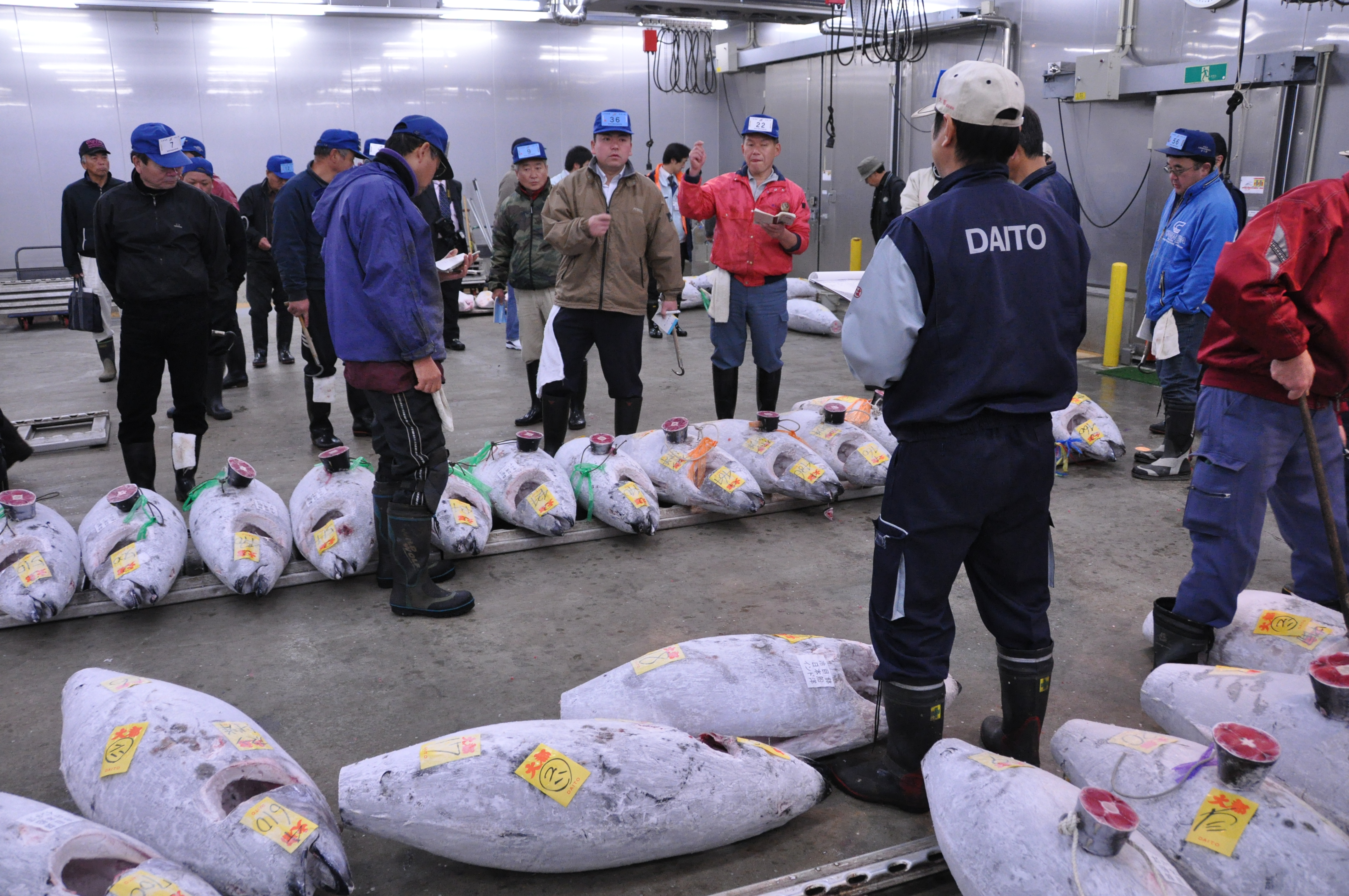
Cover: archival photograph of a tuna auction at Narita Wholesale Market, Japan (2009), Sin imai / Wikimedia Commons, CC0. Illustrative image.

Leave a Reply